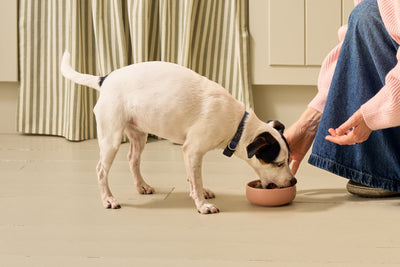
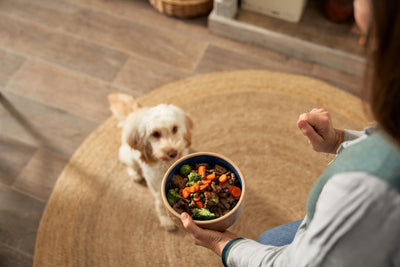
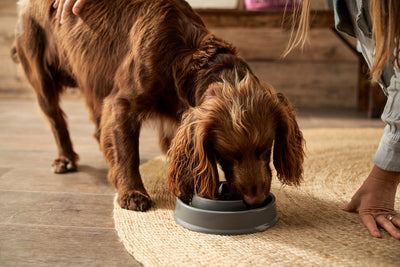
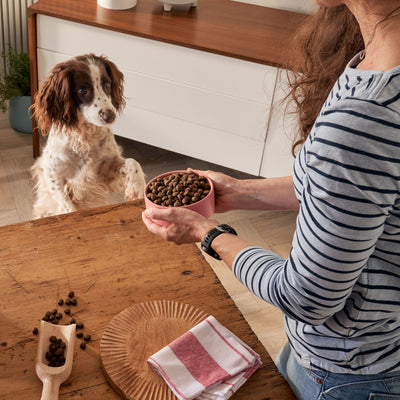
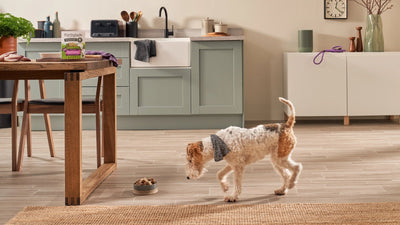
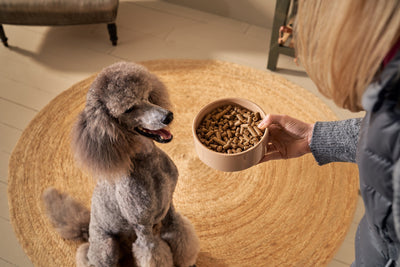
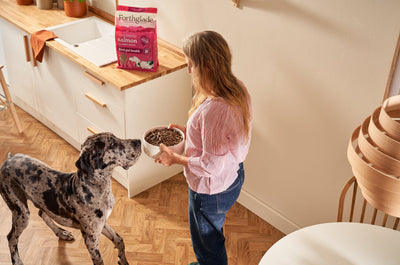
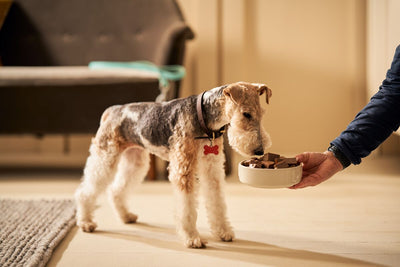
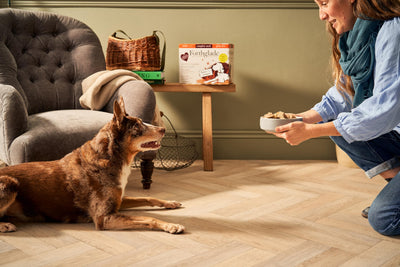
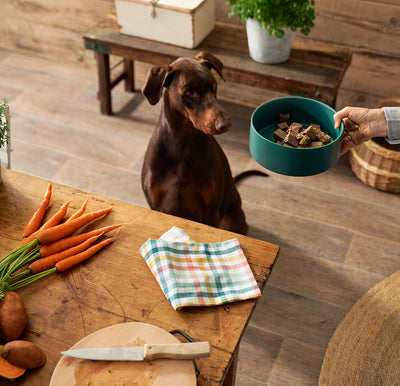
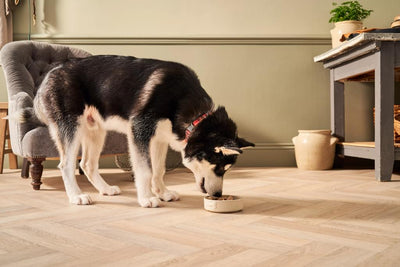
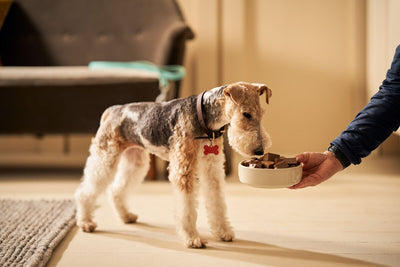
For some dogs, eating quickly is simply part of their normal feeding behaviour. Others may become particularly enthusiastic around food or learn to eat quickly when living alongside other dogs. Competition around food, excitement at mealtimes or feeling that food might be taken away can all encourage a dog to eat more rapidly.
However, if your normally relaxed eater suddenly becomes ravenous, particularly alongside changes in weight, thirst, toileting or behaviour, speak to your vet. An unusually increased appetite can sometimes have an underlying medical cause.
Is eating too quickly bad for dogs?
Some dogs are naturally fast eaters and this isn't necessarily a problem. However, if your dog regularly gulps down their food in seconds, slowing them down may make mealtimes more comfortable.
One small study looked at 56 healthy dogs and compared fast and slow eaters. The fast eaters took bigger mouthfuls and showed signs that their bodies remained more alert after eating. Slower eaters showed more of the nervous system activity associated with resting and digestion. When the researchers slowed down the fast eaters, some of these differences were reduced. It’s only one small study, so we can’t say that eating slowly will improve digestion in every dog. But it does suggest that how quickly a dog eats may influence how their body responds to a meal.
What about bloat?
Fast eating is sometimes linked with bloat, also known as gastric dilatation-volvulus (GDV). This is a serious condition where the stomach becomes enlarged and can twist.
Some research has linked eating quickly with a greater risk of GDV, particularly in larger, deep-chested dogs. However, fast eating is only one possible factor and we can’t say that it directly causes bloat. If your dog is at higher risk of GDV, speak to your vet about the best way to manage their meals.

4 ways to help your dog eat more slowly
Fortunately, slowing dinner down doesn’t need to be complicated.
1. Try a slow feeder
Slow-feeder bowls contain ridges or compartments that your dog has to eat around rather than having unrestricted access to the whole meal.
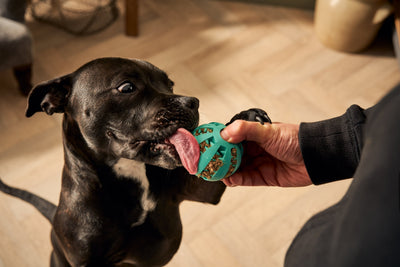
They can be particularly useful for dogs who finish food within seconds because they physically limit how much food the dog can pick up at once.
Choose one appropriate for your dog's size and muzzle shape. The aim is to make eating slower, not frustrating or difficult.
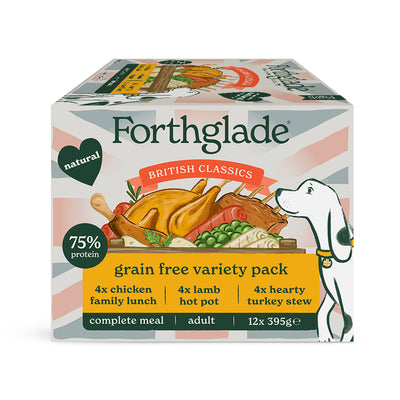
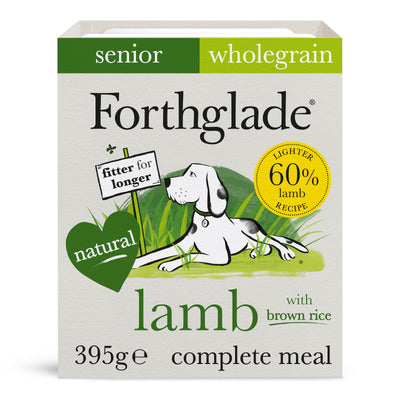
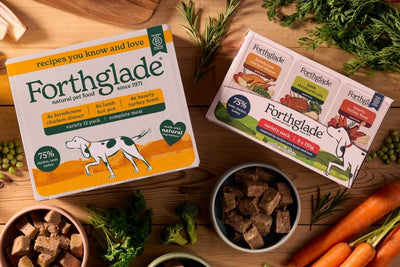
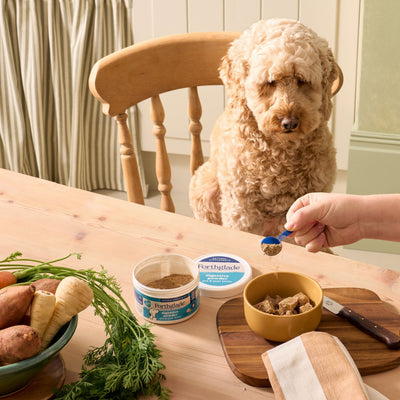
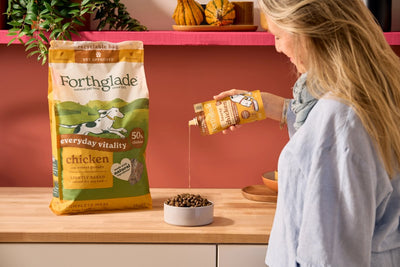
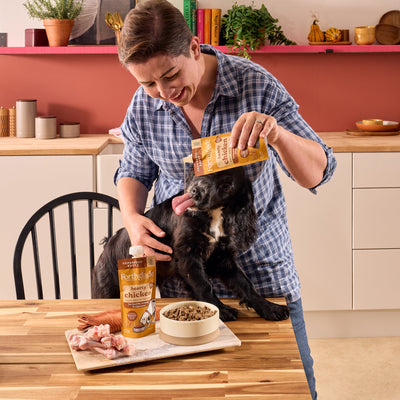
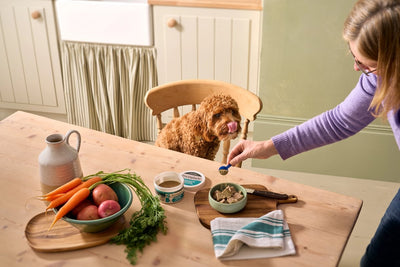
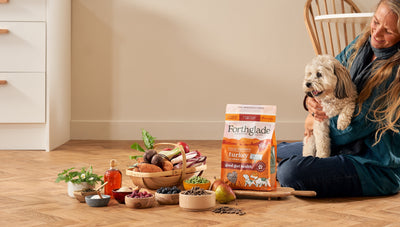
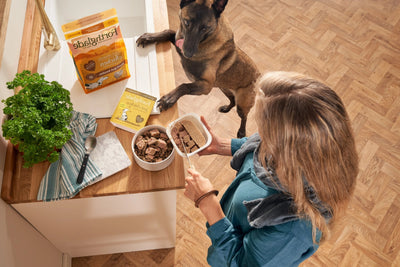
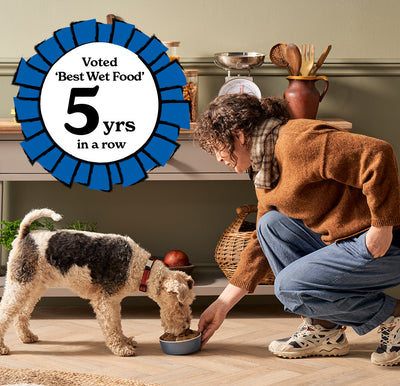
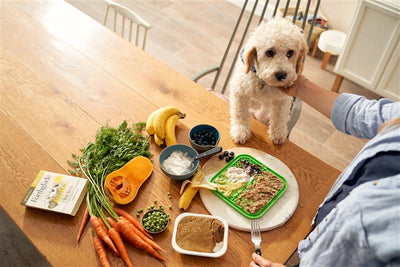
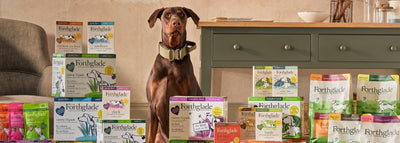
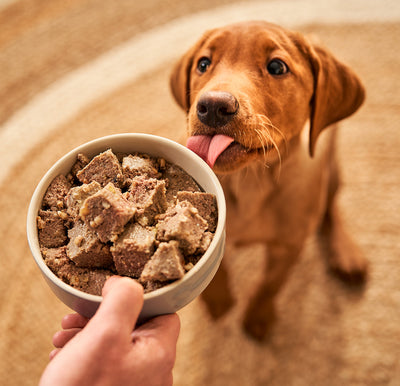
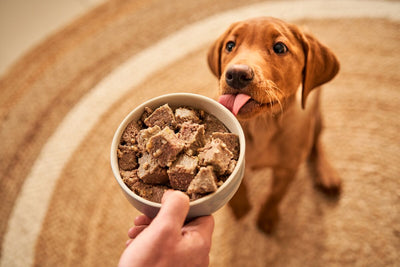
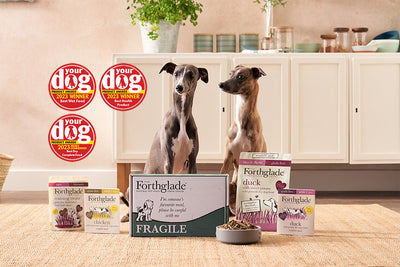
Forthglade wet food can be spread between the sections of a suitable slow feeder rather than simply being placed in the centre of a conventional bowl.
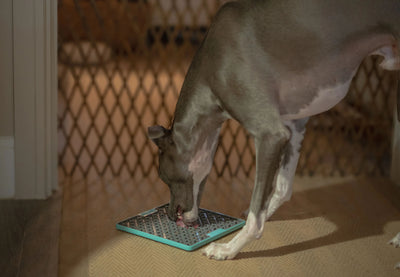
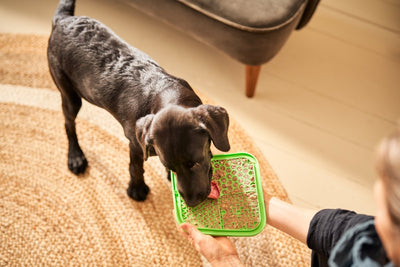
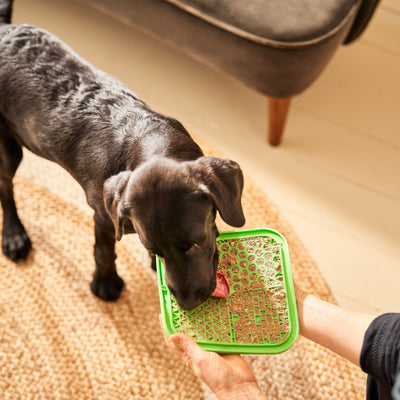
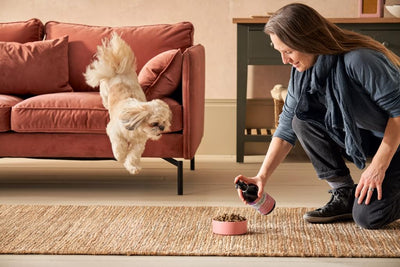
2. Use a LickiMat
A LickiMat is another simple way of changing how food is presented.
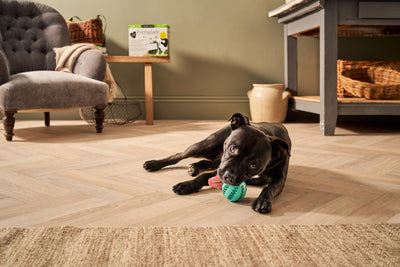
Instead of taking large mouthfuls from a bowl, your dog has to work across the textured surface with their tongue. Wet foods are particularly well suited to this because they can be spread thinly across the mat.
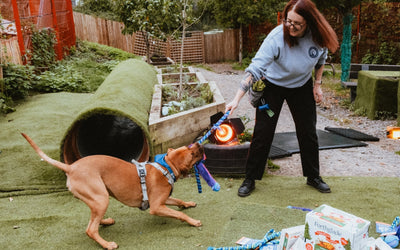
You can use some or all of your dog's normal Forthglade meal rather than adding lots of additional treats. That way, enrichment doesn't have to mean additional calories.
Always supervise your dog, particularly if they're inclined to chew things they shouldn't.
3. Divide their daily food into smaller meals
If your dog receives one or two large meals, consider whether their normal daily allowance could be divided into several smaller portions. This doesn't mean feeding more food. Simply calculate their normal daily amount and divide it across the day.
4. Create a calmer feeding environment
Look at what is happening around your dog at dinner time.
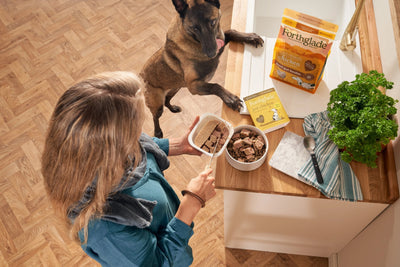
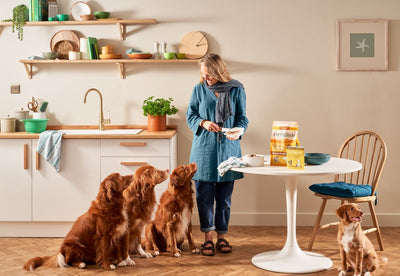
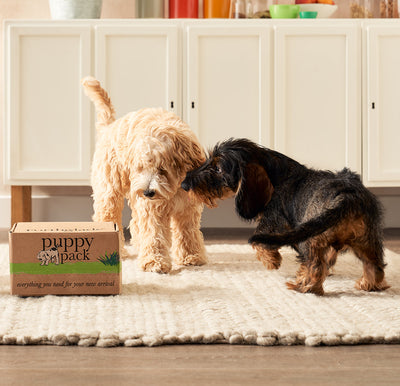
Are other dogs hovering nearby? Is there lots of excitement? Do they appear worried that another animal might approach their food?
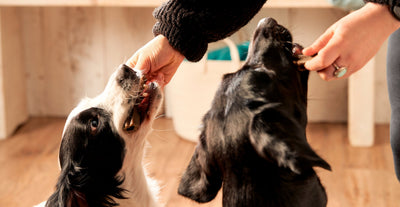
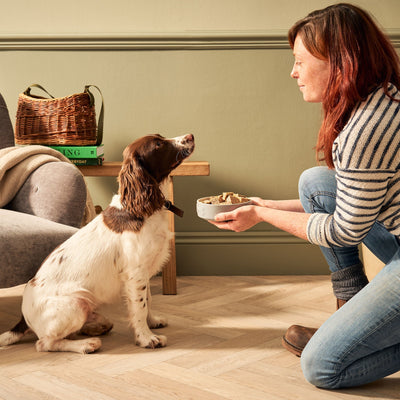
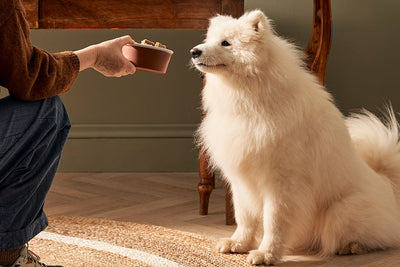
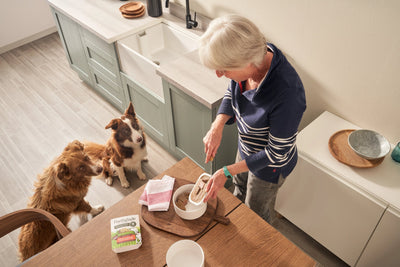
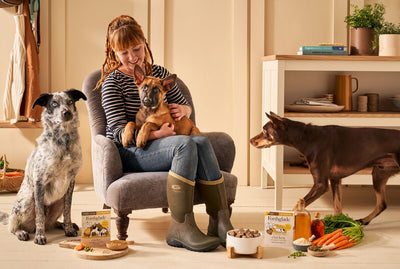
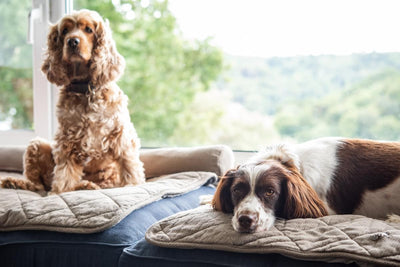
Where several pets live together, feeding dogs separately can remove unnecessary competition and allow each dog to eat at their own pace.
A predictable feeding routine in a comfortable environment can also help make mealtimes calmer and allow your dog to eat at their chosen pace.

How long should it take my dog to eat?
There isn't a scientifically established number of minutes that every dog should take to finish dinner. A Great Dane eating a large meal and a Chihuahua eating a small portion aren't directly comparable, and food texture, portion size and individual feeding behaviour will all influence eating time. Rather than watching the clock, look at your dog. If they're taking enormous mouthfuls, barely pausing between them and clearing the bowl almost immediately, experimenting with a slower method of feeding may be worth a shot. The goal isn't to make eating unnecessarily difficult. It's to create a comfortable experience that allows your dog to eat at a steadier pace.
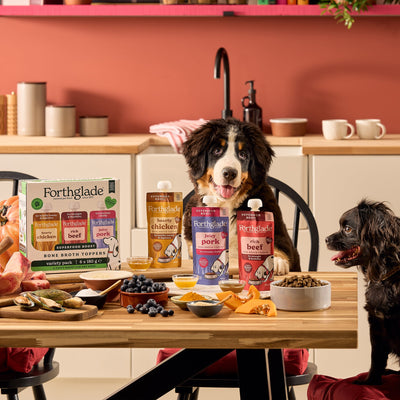
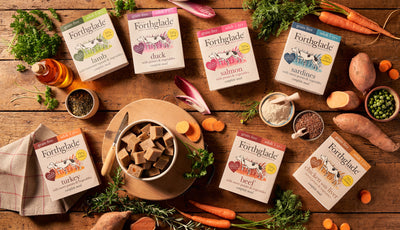
Good feeding isn't only about choosing what goes into the bowl. How we serve food can shape the eating experience too. Forthglade's complete wet recipes can be served in a bowl or used with suitable slow-feeding and enrichment options, giving you plenty of ways to find a routine that works for your dog. And if your dog still finishes dinner enthusiastically? That's okay. The aim is to make mealtimes comfortable, enjoyable and appropriate for your individual dog.