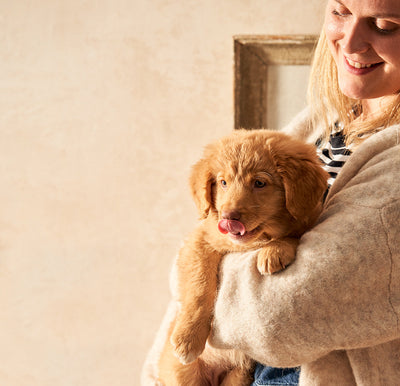
Welcoming a new puppy into your home is an exciting time but when it comes to feeding them, it can quickly feel overwhelming. With so many options on the shelves, from dry kibble to wet trays and everything in between, it’s no surprise that many puppy owners feel unsure about what’s best.
Choosing the right puppy food is an important step in supporting your puppy’s growth and development. In this guide, we’ll focus specifically on dry puppy food, when to introduce it, how to feed it, and what to expect along the way.

When do puppies start eating food?
Puppies begin life relying entirely on their mother’s milk, which provides all the nutrients they need in those early weeks. However, this doesn’t last forever.
Typically, puppies start the weaning process at around 3 to 4 weeks old. This is when they gradually transition from milk to solid food. By the time they reach 6 to 8 weeks, most puppies are fully weaned and ready to eat solid meals on their own.
At this stage, their digestive systems are still developing, so introducing food should be done gradually and with care.
Is dry or wet food better for puppies?
This is one of the most common questions new puppy owners ask and the honest answer is that there’s no best choice.
Both wet and dry foods have their own benefits, and what works best often depends on your puppy’s needs and your lifestyle.
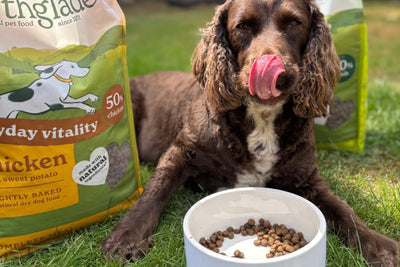
Dry puppy food (kibble):
- Convenient and easy to store
- Helps support dental health through chewing
- Usually more cost-effective
- Easy to measure for portion control
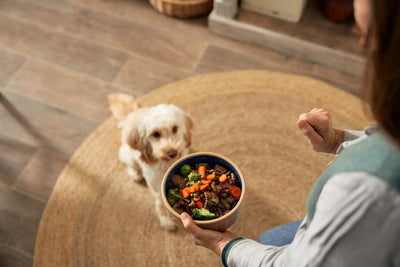
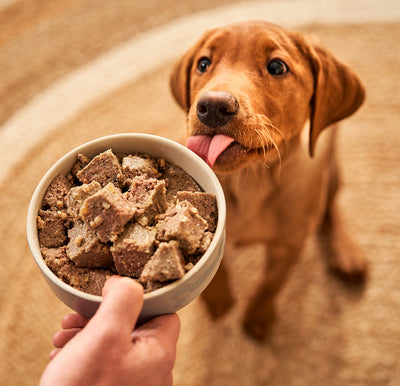
Wet puppy food:
- Higher moisture content (great for hydration)
- Often more palatable for fussy eaters
- Softer texture, which can be gentler on very young puppies
Some owners choose one over the other, while others opt for a combination of both. If you’re still weighing up your options, you can read more in our guide to wet or dry dog food.
The most important thing is choosing a nutritionally complete, high-quality food that supports healthy growth.

Feeding your puppy dry food for the first time
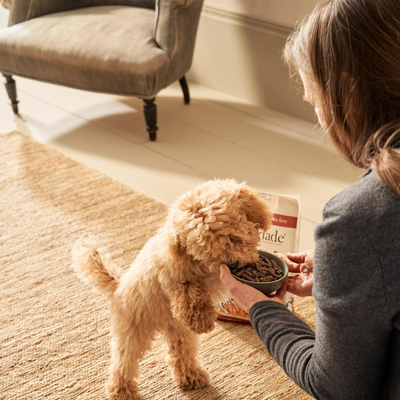
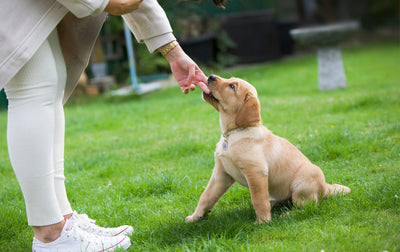
Once your puppy is fully weaned (usually around 8 weeks), they can begin eating dry food, but it’s not as simple as pouring kibble straight into a bowl.
Start slowly
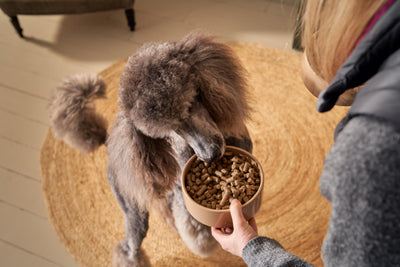
Your puppy is still getting used to solid food, so it’s important to introduce dry food gradually. Begin by mixing it with a little warm water to soften the kibble and make it easier to chew and digest.
Understand puppy-specific nutrition
Puppy kibble isn’t the same as adult dog food. It’s specially formulated to support growth, with:
- Higher levels of protein for muscle development
- Balanced calcium and phosphorus for healthy bones
- Essential vitamins and minerals for overall wellbeing
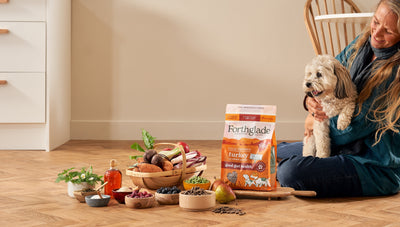
Always choose a food specifically labelled for puppies to ensure they’re getting everything they need. Certain dry foods like our Cold pressed recipes are suitable for both puppies and adult dogs (excluding Lamb Cold Pressed)
Why soaking matters
Soaking dry puppy food is especially important in the early stages:
- Softens the texture, making it easier to eat
- Helps prevent choking
- Supports digestion while your puppy’s system is still developing
Use warm (not hot) water and allow the kibble to soften for 10–15 minutes before serving.
How much dry food should I feed my puppy?
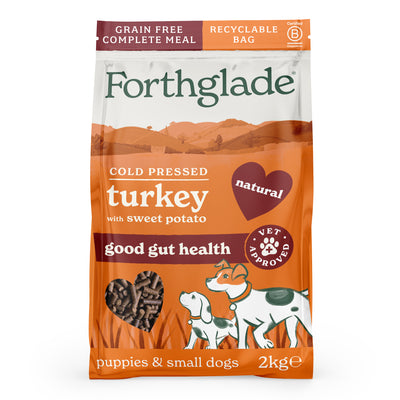
Feeding the right amount is key to supporting healthy growth without overfeeding. The exact portion will depend on your puppy’s age, weight, and breed size. Below is a general guide using our Cold Pressed Small Dog Turkey:
| expected adult weight |
puppy (2-6 months) grams per day |
puppy (6-12 months) grams per day |
| 1-2.5kg |
35-70 |
35-70 |
| 2.5-5kg |
70-115 |
70-115 |
| 5-7.5kg |
115-160 |
115-160 |
| 7.5-10kg |
160-195 |
160-195 |
| 10-12.5kg |
195-230 |
195-230 |
| 12.5-15kg |
230-265 |
230-265 |
Always check the feeding guidelines on your chosen product and adjust portions based on your puppy’s activity level and body condition. Splitting their daily allowance into 3 - 4 meals is ideal for younger puppies.
When to stop soaking puppy kibble
As your puppy grows, they’ll become more comfortable chewing and digesting dry food. You can gradually reduce soaking over time.
A typical timeline looks like this:
-
8 - 10 weeks: Fully soaked kibble
-
10 - 12 weeks: Partially soaked (less water, shorter soaking time)
-
12+ weeks: Mostly dry kibble, with occasional soaking if needed
By around 3 months old, many puppies are ready to eat dry food without soaking, but always follow your puppy’s lead. If they seem to struggle, continue softening their food a little longer.

Takeaway
Introducing your puppy to dry food is an important milestone and with a gentle, gradual approach, it can be a smooth and positive experience.
To recap:
- Puppies are usually ready for solid food from around 6 to 8 weeks
- Dry and wet food both have benefits, there’s no one-size-fits-all answer
- Start dry food slowly, soaking it to make it easier to eat and digest
- Feed appropriate portions based on your puppy’s size and age
- Gradually reduce soaking as your puppy becomes more confident eating kibble
If you’re ready to get started, choosing a high-quality dry puppy food is key. Look for recipes made with natural ingredients and tailored to support growing dogs.
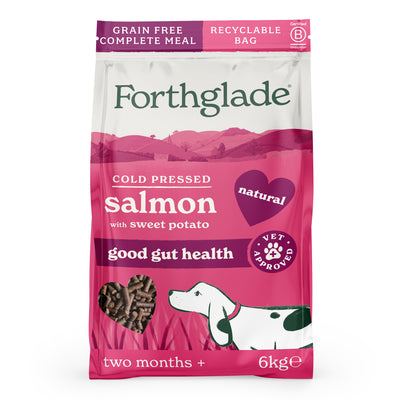
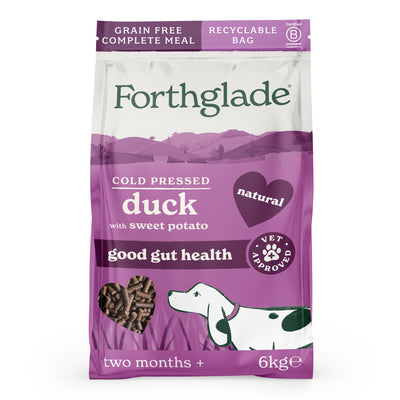
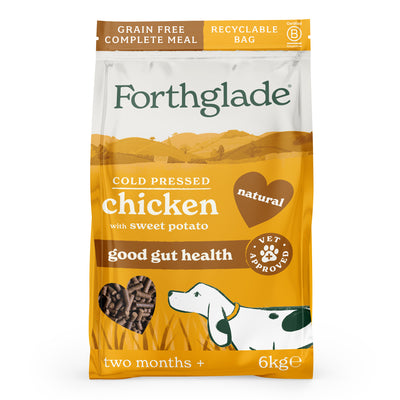
You can explore our range of puppy options, including carefully crafted recipes designed to support your puppy’s development, such as:
Shop our dry puppy food to find the right fit for your puppy’s journey.