

- Save your dog's profile and update it any time
- Receive exclusive offers and discount codes
- Feeding guide recommendations for your dog
- Get personalised Subscribe and Save offers

Creating a Calm, Positive Dental Routine for Your Dog
Dental health is a crucial part of a dog’s overall wellbeing, yet many dogs can feel unsure about the process of having their teeth and gums cleaned. For us guardians, it can be easy to fall into the habit of not cleaning teeth - because we don’t spot the issues in their mouths as often as we do the mud on their coats! As a behaviourist, I also see dog parents struggling to maintain a consistent dental routine because their dog finds the process too stressful. The good news is that with patience, positive reinforcement, and a gentle dog-centred approach, you can turn your dog’s dental routine from a source of anxiety or even conflict, into a more calm and positive experience for both of you.

When we start out with a new dental routine, it’s important to focus first on creating positive associations - changing the emotional picture from one of concern or worry to one of calmness and curiosity. If your dog has previously felt pressure or discomfort when we handle their mouths - or if they’ve had a previous dental or jaw issue - their anticipation can be of something negative about to happen. So they may tense up or resist. Some may even escalate to a growl or bite if they’re really trying to warn you away from them. We want to try and create a positive anticipation to flip this emotional response to one of ease.
Introducing the Brush as a Positive Presence
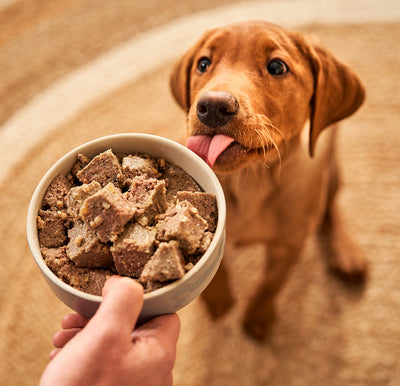
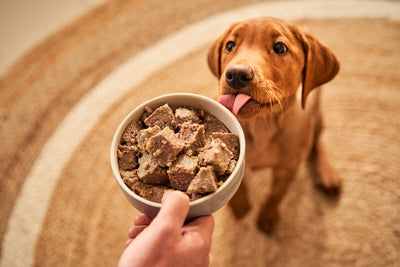
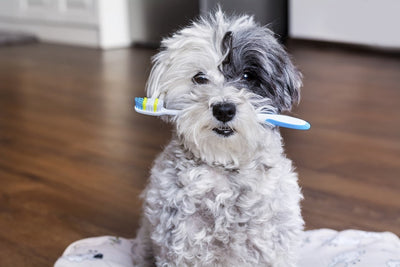
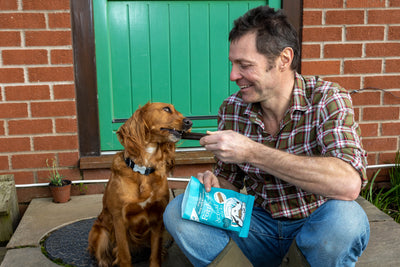
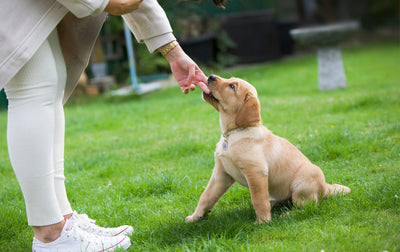
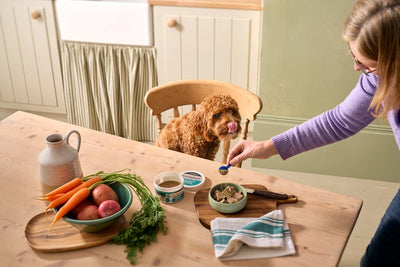
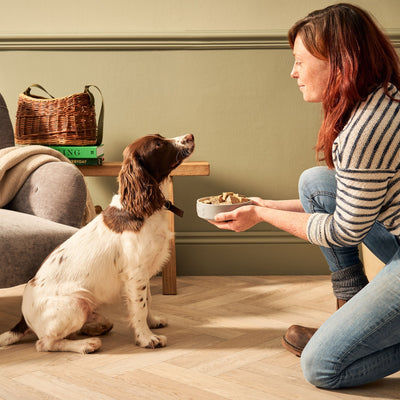
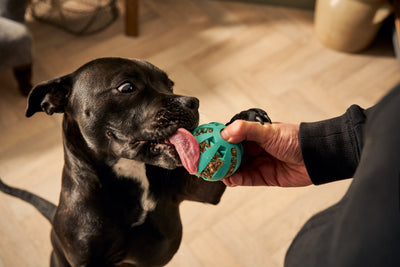
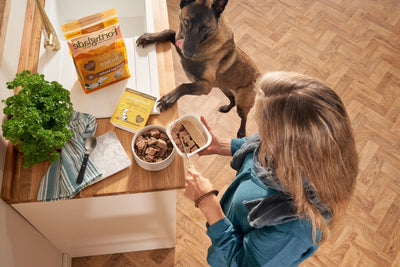
If we build upon pairing our presence and the sensation of touching their mouth with positive experiences, they can learn to associate these interactions with more relaxed and content feelings. For example, when introducing toothbrushing, you could begin by letting your dog sniff and lick the brush or even your finger covered in a tasty treat - such as a smear of our delicious wet food, natural peanut butter, or coconut oil. At this stage, you’re not aiming to brush; your goal is simply to make your hand or the brushing tool a positive presence near their mouth.
Building the Routine Gradually
When starting out with this new dental routine, it’s really important to build it up gradually. Many of us might make the mistake of attempting to brush all of our dog’s teeth in one go, which can quickly overwhelm the dog and create negative associations. Instead, start small. Work on individual parts of their mouth first - perhaps just the front teeth - and build out from there, giving lots of breaks along the way.
Using Gentle Tools and Calm Handling
Once your dog is comfortable with your finger in their mouth or licking a brush, you can introduce a finger brush - a bit like a thimble that sits over your own fingers. This allows gentle contact with the teeth and gums without the size or strength of a standard doggy toothbrush. Use slow, calm movements, pausing if your dog looks like they need a break or they start to back away.
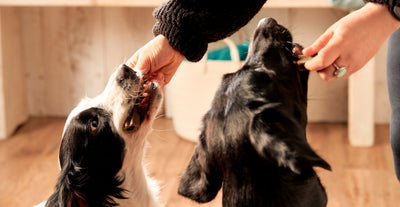
Remember that success is measured by how calm your dog remains during the process and how easy they found it - not in how many teeth you clean. Pairing these early brushing sessions with a chew mid-way through or straight after can also help to reinforce the positive experience - ending the activity with something that can lower stress and increase feel-good hormones.
The Emotional and Physical Benefits of Chewing
Chewing is also actually a great way to not only help improve your dog’s dental health but also for you to assess if there might be any jaw or teeth issues. If you see your dog reluctant to chew or only using one side of their mouth to chew on, it might indicate there’s a physical issue there.
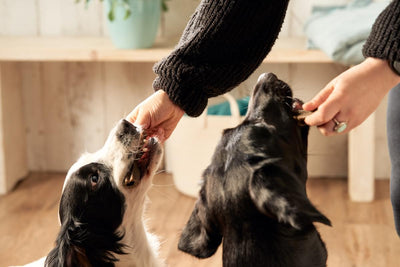
The benefits of chewing are in-fact wide-reaching. Chewing helps to massage the gums, can aid in naturally cleaning the teeth as well as releasing endorphins - the “feel-good” hormones that encourage relaxation. Combining brushing with regular chewing ensures ongoing oral health while also providing mental stimulation, promoting relaxation, and releasing those happy, feel-good hormones that make your dog just enjoy life a little more.
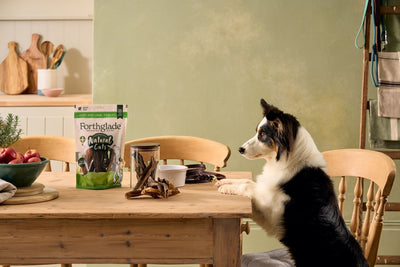
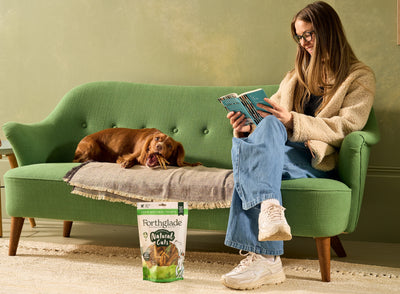
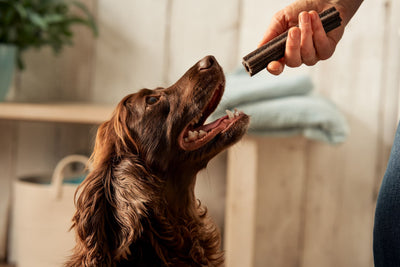
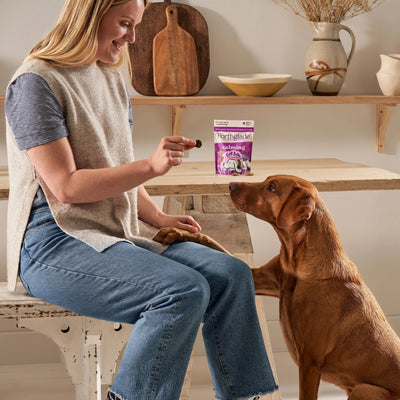
"From a behavioural perspective, introducing long lasting chews such as these calming dental sticks can be a great way to support your dog’s oral health without creating stress. These chews can provide an enjoyable chewing experience, support dental care and also help to create natural feel-good endorphins to boost your dog’s moodstate. By incorporating them as part of your dog’s weekly routine, you can help support your dog’s emotional wellbeing as well as their dental health." - Canine Behavourist, Caroline Wilkinson

Respecting Individual Differences and Timelines
When it comes to developing your dental routine, it’s important to remember that every dog is unique. Some dogs may take weeks or even months to fully accept a toothbrush, while others may adapt more quickly. Patience and consistency are key. Regular, short sessions are far more effective than infrequent, long sessions that can overwhelm your dog and leave them hating the process even more.
Listening to Your Dog’s Stress Signals
A positive approach to dental care needs to focus on your dog’s emotional wellbeing as well as their health. Paying attention to their body language is a key part of the process here. Your dog can show stress in subtle ways, such as looking away from you, yawning, lip licking or even lots of blinking - it doesn’t always have to be a growl that says “I’m not comfortable with this”. If your dog shows any of these signals, pause and allow them time to relax before continuing or ending the session. Forcing the process can create negative associations, which may make dental care even more challenging over time.
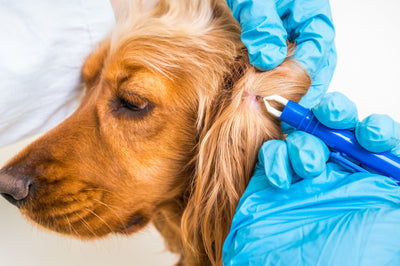
Another crucial consideration in all areas of dog behaviour is whether there might be pain present - is your dog physically uncomfortable? As mentioned before, if your dog is reluctant to chew or if your dog suddenly becomes unhappy about having their teeth brushed, it’s important to consult your vet for advice. Dental conditions such as gingivitis, broken teeth, or oral infections, can make brushing uncomfortable or even painful. Addressing any underlying issues as soon as you can, ensures that dental care remains a positive, manageable experience rather than a source of discomfort.
How Calm Handling Builds Confidence Beyond Dental Care
As well as making your own life easier and building a bond of trust with your dog, the benefits of a calm dental routine extend beyond just their mouth. Dogs who have enjoyed relaxed, positive handling tend to be more confident and cooperative in other situations, such as grooming or vet visits.
By using a calm, gentle and positive approach to gradually build up your dog’s dental routine, as well as pairing handling with pleasurable experiences - you’re not just supporting dental health, you’re enhancing your dog’s overall emotional wellbeing. Plus you’ll create a wonderfully strong bond with your dog.
"Chewing isn’t just good for teeth - it’s a natural way for dogs to relax and helps to produce feel-good hormones. When added into a dental routine, chewing can help your dog to feel more relaxed during handling and brushing. By offering safe, tasty chews before, during or after toothbrushing you can create a more positive association with oral care - which can help make the experience less stressful. Over time, this combination of enrichment, reward, and gentle routine can build a confident and relaxed dog." - Canine Behavourist, Caroline Wilkinson
Making Toothbrushing a Normal, Stress-Free Habit
Through patience, positivity, and consistency, brushing can become a normal, stress-free part of your dog’s day. Over time, these small, thoughtful steps cultivate not only healthier teeth and gums but also a happier, more confident dog who views your hands - and their doggy toothbrush - as something positive not scary.
Browse our Dental Range for more dental tips and tricks.
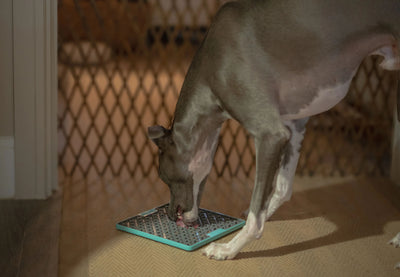
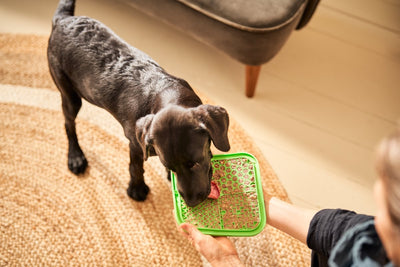
What to Put on a LickiMat: 6 Dog LickiMat Ideas From a Nutritionist
enrichment
lickimat
nutritionist




























Are Christmas Trees Toxic To Dogs? Dog Proofing Xmas Tree
christmas
Dog Ownership & Lifestyle
winter