

- Save your dog's profile and update it any time
- Receive exclusive offers and discount codes
- Feeding guide recommendations for your dog
- Get personalised Subscribe and Save offers










How to Improve Your Dog's Gut Health
If you’re searching for how to improve dog gut health, you’re not alone. Digestive problems are increasingly common in our dogs, but gut health is about much more than occasional diarrhoea or an upset stomach. Your dog’s gut is responsible for breaking down food, absorbing nutrients, maintaining a protective barrier and supporting the immune system. When these processes work well together, dogs tend to have better energy, healthier skin and more stable digestion.
So let’s take a look at what gut health in dogs really means, what causes poor gut health, what helps gut health and the role of prebiotics.

What is Gut Health in Dogs and Why Is It Important?
True gut health refers to the gut’s overall ability to:
- Break down food properly
- Produce enough stomach acid and digestive enzymes
- Move food through at the right speed
- Absorb and use nutrients efficiently
- Maintain a strong gut lining
- Support balanced immune responses
- Maintain a healthy microbiome
So let’s start at the beginning.
The stomach works a bit like a washing machine. It physically churns food to break it apart, whilst also releasing acid and enzymes that help turn it into a form the body can use. If this process isn’t working properly, food may not be fully broken down, which can affect digestion further along the gut.
After the stomach, the small intestine continues the job. More enzymes are added, and this is where most nutrients are absorbed into the bloodstream.
The lining of the intestine acts like a protective filter. It allows digested nutrients through into the body whilst keeping larger particles and microbes contained. The cells sit closely together to form a strong barrier (like an army standing shoulder to shoulder). If this lining becomes irritated or weakened, unwanted substances can slip through and start to cause problems (like inflammation).
Alongside that important gut barrier sits the microbiome. The microbiome is made up of beneficial bacteria and other microbes. These microbes help break down certain fibres that your dog cannot digest alone. In doing so, they produce helpful compounds that nourish the gut lining, support immune balance and even influence behaviour through the gut–brain connection.
When the stomach is breaking food down properly, nutrients are absorbed efficiently, the barrier remains strong and the microbiome is balanced, your dog is more likely to have consistent stools, healthy skin, steady energy and a resilient immune system
But disruption in any part of the gut can have consequences.
What Causes Bad Gut Health
Common contributors to poor gut health include:
- Low-quality or highly processed diets
- Chronic stress
- Food sensitivities
- Repeated antibiotic use
- Long-term medication use
Stress is often underestimated. When your dog feels anxious or overstimulated, their body switches into a “fight or flight” state. In this state, saliva production drops, stomach acid secretion may reduce and digestive movement becomes irregular. This means your dog may not digest or absorb nutrients as effectively, even if the diet itself is complete and balanced.
You can read more about behavioural stress in our guide to separation anxiety in dogs.
Food sensitivities can also irritate the gut lining and disturb microbial balance. If your dog struggles with ongoing digestive upset, options such as sensitive stomach dog food may help support comfort.
Signs of Bad Gut Health in Dogs
Signs that your dog’s gut may not be functioning optimally include:
- Vomiting or diarrhoea
- Frequent loose stools or gas
- Itchy skin or recurrent ear issues
- Dull coat
- Weight changes
- Low energy
- Bad breath
Persistent symptoms should always be discussed with your vet.

How to Improve Dog Gut Health
Improving dog gut health means supporting the entire digestive system, from stomach function through to microbial balance.
1. Support Digestion First
Ensure the basics are in place.
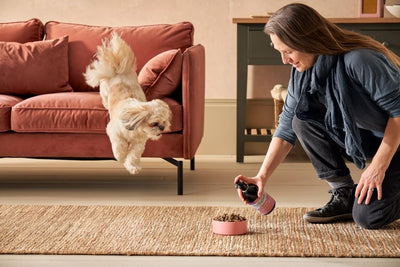
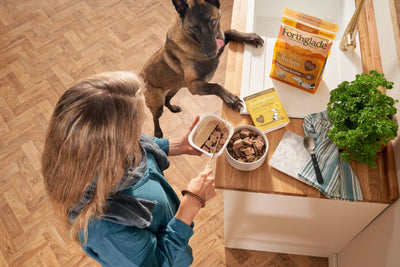
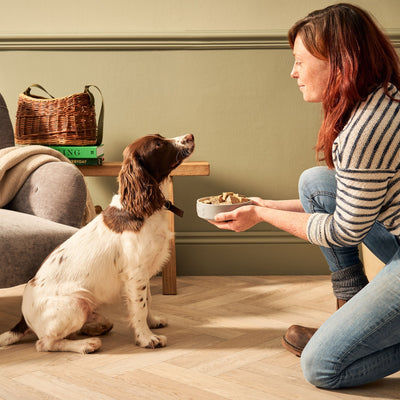
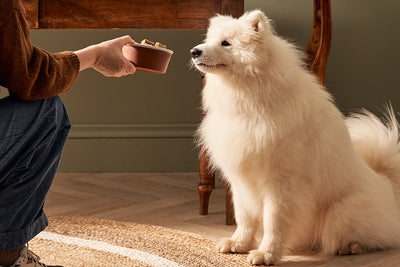
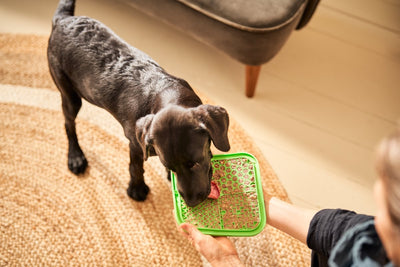
Your dog’s digestion works best in a calm, relaxed state. Providing consistent routines, appropriate exercise, mental stimulation and a calm feeding environment can all help support gut function. Feeding, walking and settling at similar times each day helps regulate your dog’s internal rhythm, including digestion. Regular movement supports healthy gut motility, allowing food to move through the digestive tract at the right speed. Enrichment activities and training sessions can reduce boredom and stress, both of which can disrupt digestion. Offering meals in a quiet space, away from distractions or competition, encourages a relaxed “rest and digest” state, which supports efficient stomach acid and enzyme activity.
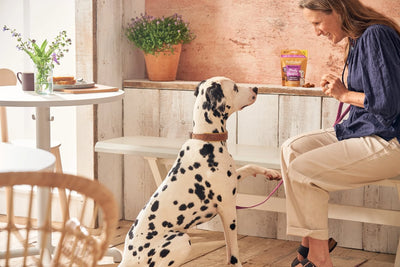
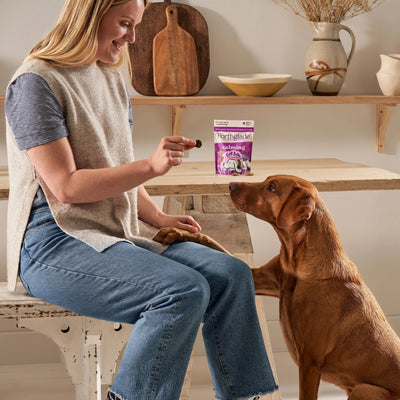
For dogs that struggle with anxiety, calming dog treats may help encourage more relaxed daily routines alongside good nutrition.
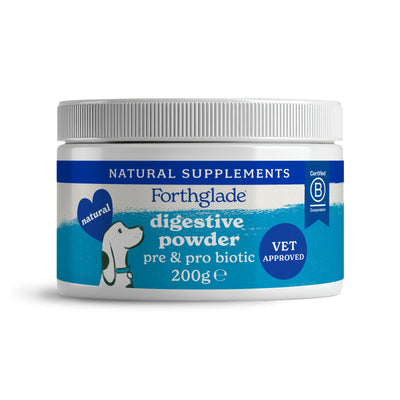
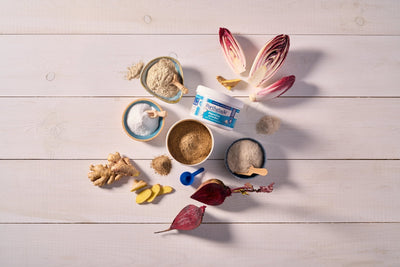
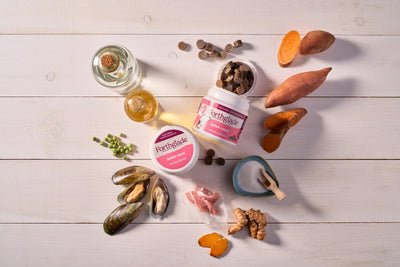
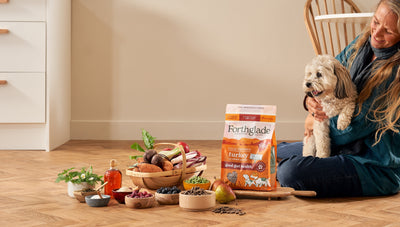
Forthglade’s Digestive Health Powder includes ginger, traditionally used to support digestive comfort, enzyme activity and normal gut motility.
2. Add Prebiotics and Probiotics
Understanding these terms helps clarify what they actually do.
Prebiotics are specific fibres that feed beneficial gut bacteria. Ingredients such as chicory root extract (a source of fructooligosaccharides or FOS), mannose oligosaccharides or MOS and sugar beet pulp provide fuel for helpful microbes. When these bacteria ferment fibre, they produce short-chain fatty acids that help support the gut lining and regulate immune responses.
Probiotics are live microorganisms that help maintain microbial balance. Their effects are strain-specific and must survive the digestive tract to be effective.
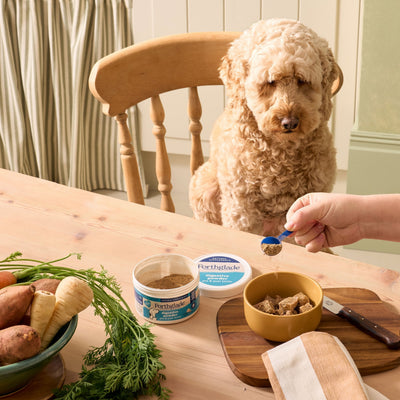
Forthglade’s Digestive Health Powder combines prebiotics and a targeted probiotic strain (Bacillus velezensis) to support digestion, nutrient absorption and microbial balance, as part of a daily routine.

3. Identify and Reduce Triggers
If digestive upset is ongoing, consider whether certain ingredients may be irritating your dog’s system.
Switching to hypoallergenic dog food or grain free dog food may help in some cases. You can also read more about food allergies in dogs to better understand how sensitivities develop.
Always transition gradually when changing food. Follow guidance on changing your dog’s diet to help minimise disruption.
4. Promote Hydration
Water may be the simplest nutrient, but it is frequently forgotten. Without adequate hydration, digestion, nutrient transport and stool quality can all suffer.
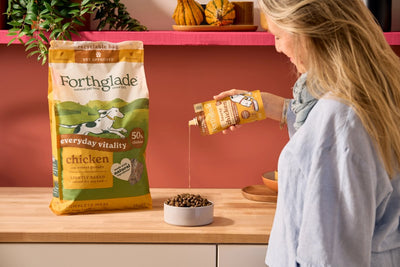
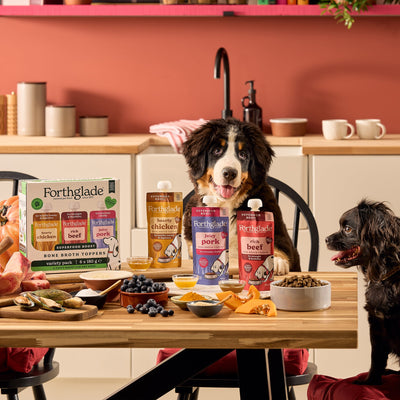
Adding moisture to meals can help some dogs. Bone broth is one option to increase fluid intake.
5. Incorporate Superfoods
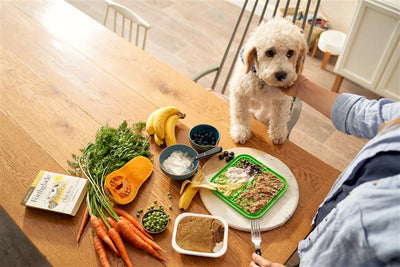
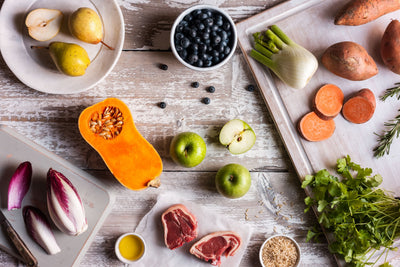
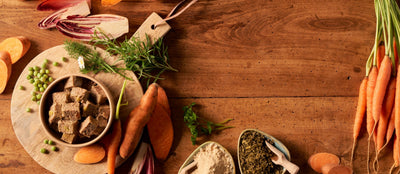
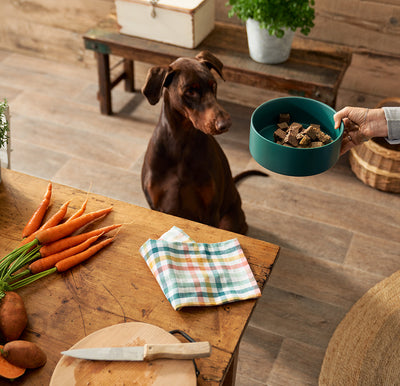
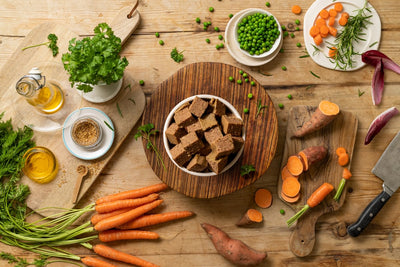
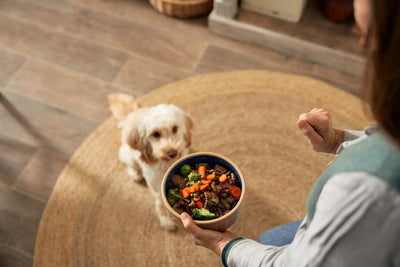
Adding small amounts of nutrient-rich whole foods to your dog’s diet can help support gut health. Many everyday ingredients provide fibre, vitamins, minerals and antioxidants that contribute to a healthy digestive environment.
Fibre from vegetables and fruits can help feed beneficial gut microbes, while quality protein provides the amino acids needed to maintain the gut lining. These foods can be offered as occasional additions to meals or as simple, fresh treats.
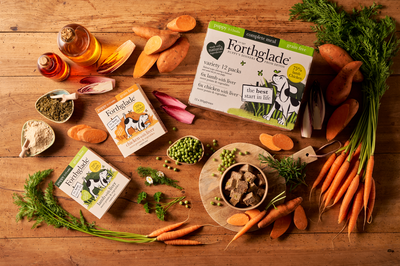
Superfoods to try include:
- Apples (remove seeds and core)
- Blueberries
- Watermelon (no rind or seeds)
- Pumpkin
- Steamed broccoli
- Green beans
- Spinach
- Beetroot
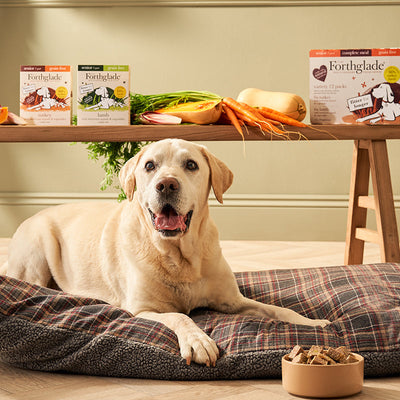
- Carrot
- Cucumber
- Sweet potato
- Chicken
- Turkey
- Salmon
- Egg
- Bell pepper
Always introduce new foods gradually and in small amounts to avoid digestive upset. These additions should complement a complete, balanced diet rather than replace it.

Conclusion
Improving your dog’s gut health is not about one quick fix. It is about supporting the whole digestive system so it can break down food efficiently, absorb nutrients properly and maintain a strong, balanced internal environment.
Start with a complete, balanced diet and calm feeding routines. Introduce changes gradually and support hydration. For dogs who may benefit from additional digestive support, a daily supplement combining prebiotics and probiotics such as Forthglade’s Digestive Health Powder, can help maintain microbial balance and gut lining integrity as part of an ongoing routine.


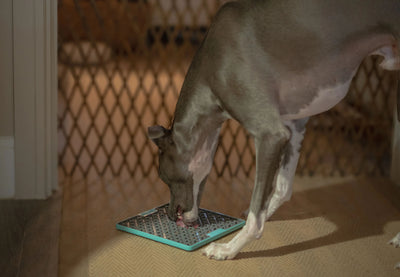
What to Put on a LickiMat: 6 Dog LickiMat Ideas From a Nutritionist
enrichment
lickimat
nutritionist













Are Christmas Trees Toxic To Dogs? Dog Proofing Xmas Tree
christmas
Dog Ownership & Lifestyle
winter